 English
 Deutsch
 Italiano
 Français
 Português
 ไทย
ไทย
 Tiếng Việt
 Polski
 Türkçe
 Nederlands
 Română
 한국어
한국어
 Svenska
 Español
On-balance volume (OBV) was introduced by Joseph Granville in 1963 as a trading indicator built on a simple belief: smart money leaves an institutional accumulation trail before price reacts. In technical analysis, that sounds great. In practice, most traders fail with OBV indicator for one reason: they only study it after the candle closes, not while price is moving.
The main problem is that a small pullback can hide a real shift in trading volume. A sharp price spike can fake a reversal. And a slow price grind can build pressure without obvious signals. That’s why we don’t stop at theory. With Forex Tester Online, we can practice the On Balance Volume reversal signal across 20+ years of tick data before risking a single dollar.
But let’s start from the beginning.
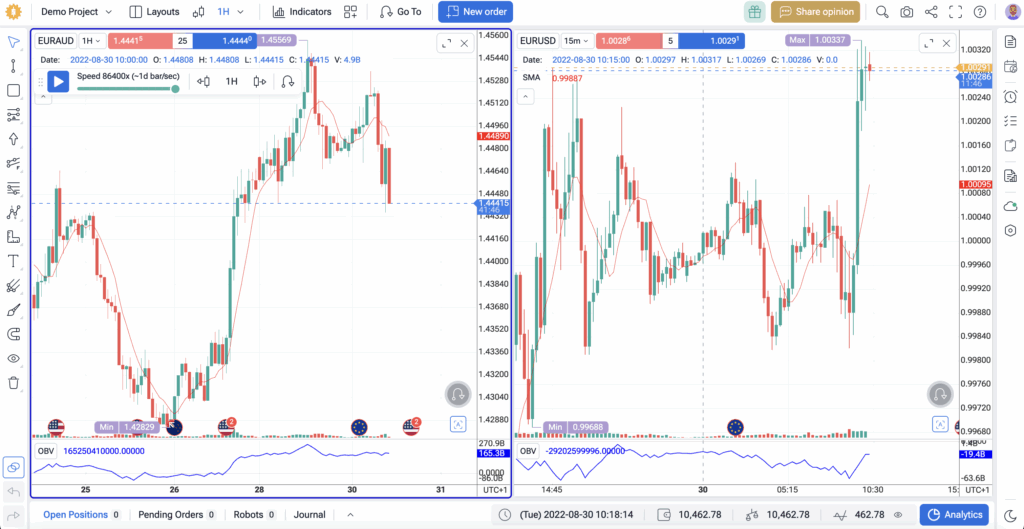
How Does OBV Work (Calculation & Formula)
This is a running total. It adds today’s trading volume when the closing price finishes higher than the prior close. It subtracts trading volume when the closing price finishes lower. If the closing price is the same, it does nothing. Simple math, but it can tell us when buying or selling pressure is building before price makes it obvious.
The logic of the OBV formula is always the same:
- price up (close > prior close): add volume
- price down (close < prior close): subtract volume
- price flat (close = prior close): no change
On-balance volume formula
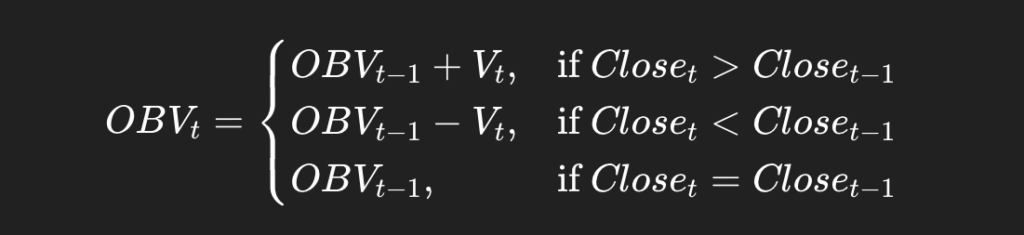
*In this OBV formula, Vt is the period’s volume (or tick volume in Forex).
Comparison: OBV vs. accumulation/distribution (A/D)
They both try to measure buying vs selling pressure, but they do it differently.
- On Balance Volume is binary. If the close is up, it counts the whole period’s volume as “up.” If the close is down, it counts it as “down.”
- A/D is weighted. It uses where the close sits inside the high-low range (close location value) to scale the volume. A close near the high counts as stronger accumulation than a close near the middle.
Basically, the OBV indicator is cleaner and faster to read. A/D is more nuanced inside the candle.
The “tick volume” nuance (Forex)
In stocks, volume is real shares traded. In Forex, we don’t have a centralized tape, so it is built on tick volume (how many times price updates). It’s not perfect, but it’s a useful proxy for activity in liquid pairs.
Most platforms ship On Balance Volume by default. In Forex Tester Online we can also test custom variations, like OBV with a moving average overlay, and see which setting holds up over a large sample.
Please make sure that you understand the concept of this indicator before we move on to the next part.
How to Read OBV Charts
Price shows what already happened. This indicator tries to show what’s building under the surface. Two reads matter most here: trend confirmation and divergence.
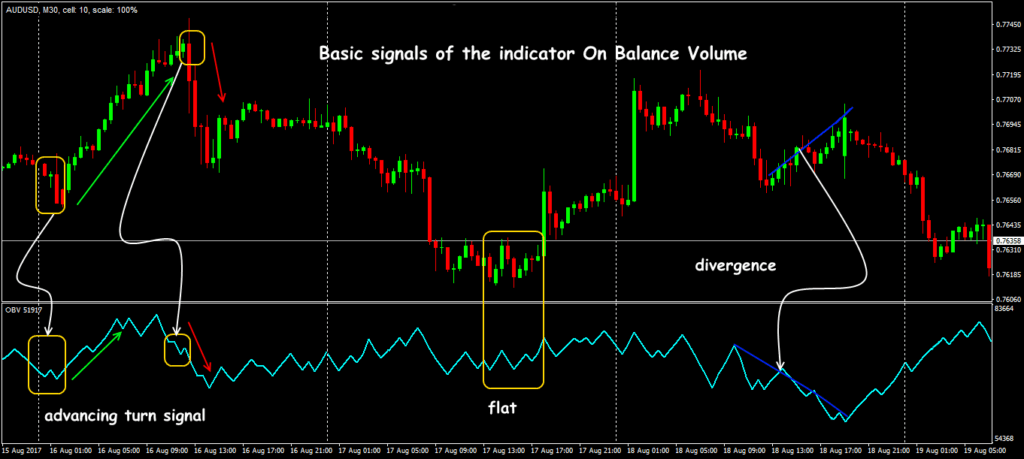
Trend confirmation
The cleanest use is alignment.
- if price prints higher highs and On-Balance Volume also prints higher highs, the trend has support
- if price prints lower lows and On Balance Volume also prints lower lows, the down move has support
This doesn’t mean buy now. It means the move is not just a thin push. The buying or selling pressure is backing it.
A practical habit: when price breaks a level, check if On Balance Volume also breaks its prior swing. If it doesn’t, we treat the breakout with more caution.
You may need some technical analysis skills to confirm trends properly.
Divergence (the most important signal)
Divergence is when price and On Balance Volume disagree. This is where the OBV indicator acts like a leading indicator. It warns that the current move is losing fuel.
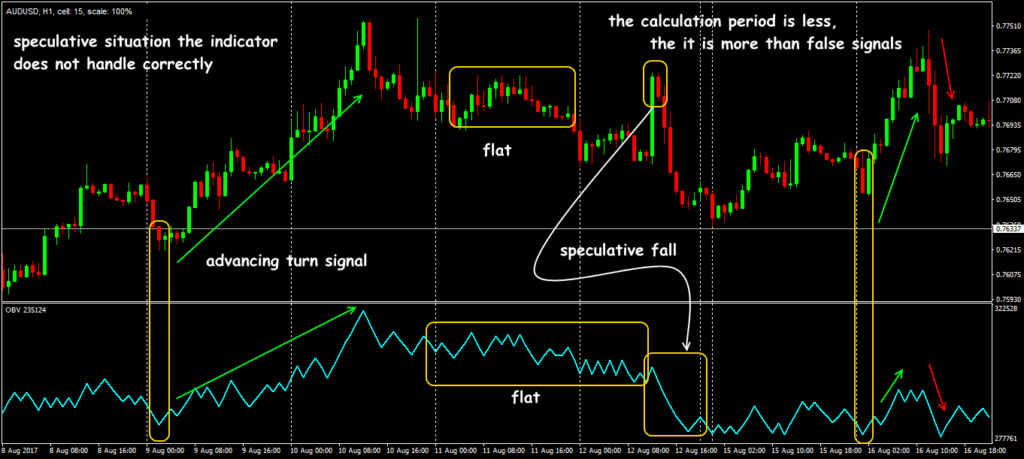
We don’t trade divergence alone. We use it as an early warning, then we wait for structure to confirm.
Bullish divergence (price down, indicator up)
What it looks like:
- price makes a lower low
- OBV makes a higher low
Interpretation:
- price is still dropping, but selling pressure is fading
- smart money may be absorbing supply, or sellers are simply running out
How we trade it (basic):
- we mark the lower low on price
- we mark the higher low on OBV
- we wait for price to reclaim a key level or break a short-term swing high
- stop goes below the recent low, because if that breaks, the idea is wrong
Bearish divergence (price up, OBV down)
It is literally the same, but in reverse.
What it looks like:
- price makes a higher high
- On-balance volume makes a lower high
Interpretation:
- price is rising, but buying pressure is fading
- the move can still continue, but the risk of reversal increases
How we trade it (basic):
- We mark the higher price.
- Then we mark the lower high on On Balance Volume.
- We wait for a break of structure (lower low on the execution timeframe) or a rejection at resistance.
- Stop goes above the recent high.
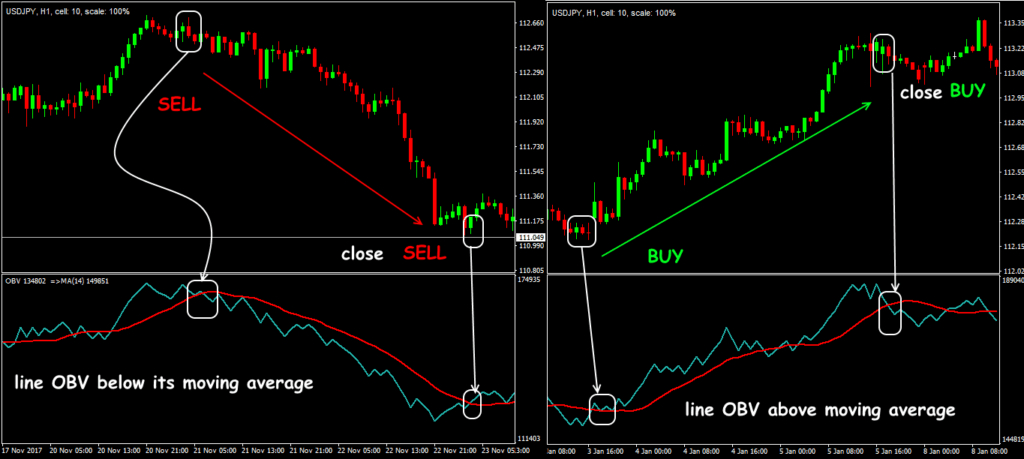
Visual tip: use the same swing points on both charts. Don’t “force” the lines. If you need to squint to see it, skip it. Clean OBV divergence is usually obvious, especially on H4 and daily charts.
5 Actionable OBV Trading Strategies
Copy any of them (or all 5), backtest them on Forex Tester Online, drill technical analysis and execution, and finally implement in your trading. You are welcome!
Strategy 1: The classic divergence (the reversal signal)
Idea: price can keep pushing to a new low or high even when real pressure is fading. It often “tells on it” early. When price makes a new extreme but it doesn’t, we treat it as a reversal warning.
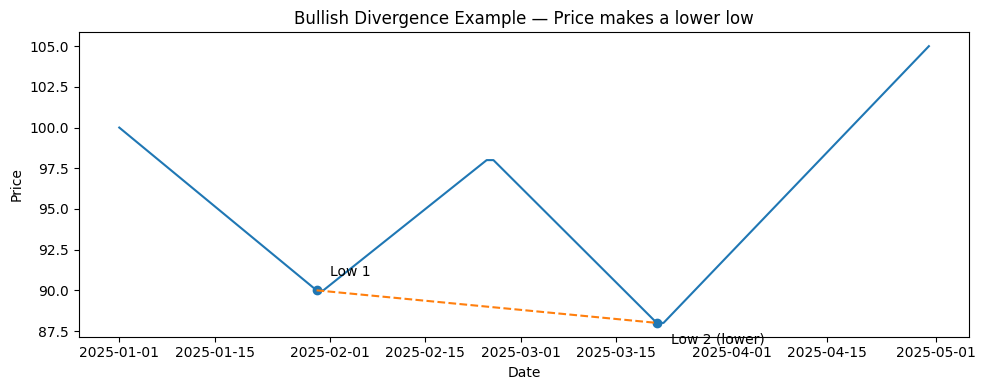
Bullish setup (reversal up):
- price prints a lower low
- the indicator prints a higher low
- we wait for confirmation: a break above the last swing high or a reclaim of a key level
- stop goes below the recent low (the invalidation point)
Bearish setup (reversal down):
- price prints a higher high
- OBV prints a lower high
- we wait for confirmation: a break below the last swing low or a rejection from resistance
- stop goes above the recent high
We keep it simple: divergence is the alert, structure is the trigger.
How we backtest it:
Load a 4-hour chart and pick a long sample (several years). Use rewind to jump to prior bottoms and tops, then replay forward and mark every clean On Balance Volume divergence. Take only trades where price confirms with a structure break. Track win rate, average R, and how often OBV divergence appears too early. Then refine one rule (confirmation trigger or stop placement) and re-test.
If you need more detailed instructions, you can scroll down and find them later in this article.
Strategy 2: The trendline breakout (the early entry)
Idea: sometimes it breaks first. We draw a simple trendline on the OBV line itself. When it breaks its downtrend line, it can signal that buying pressure is back even before price breaks resistance.
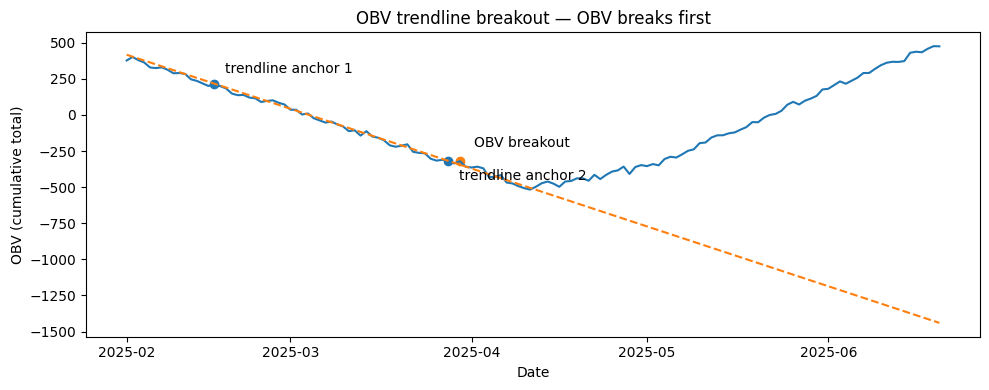
Setup (bullish):
- Price is still capped under resistance, or moving sideways.
- The OBV indicator is trending down, so we can draw a clean descending trendline on swings.
- Entry trigger: On Balance Volume closes above that trendline.
- Confirmation: price breaks the local swing high or reclaims a level.
- Stop goes under the last swing low (or under the range low).
Bearish is the mirror: an OBV uptrendline breaks down first, then price follows.
How we backtest it:
Open and draw the trendline directly in the window. Use replay and speed up to 10x to get reps fast. Each time On-Balance Volume breaks its line, pause and record what happens next: does price break structure within the next 3-10 candles, or does it fade? Track win rate, average R, and how many breaks were false signals in choppy ranges.
Strategy 3: The moving average crossover (trend filtering)
Idea: we don’t use On-Balance Volume to time the exact entry. We use it to filter bad trades. A simple way is adding a 20-period weighted moving average to the line. When the line is above its average, we prefer longs. When it’s below, we prefer shorts.
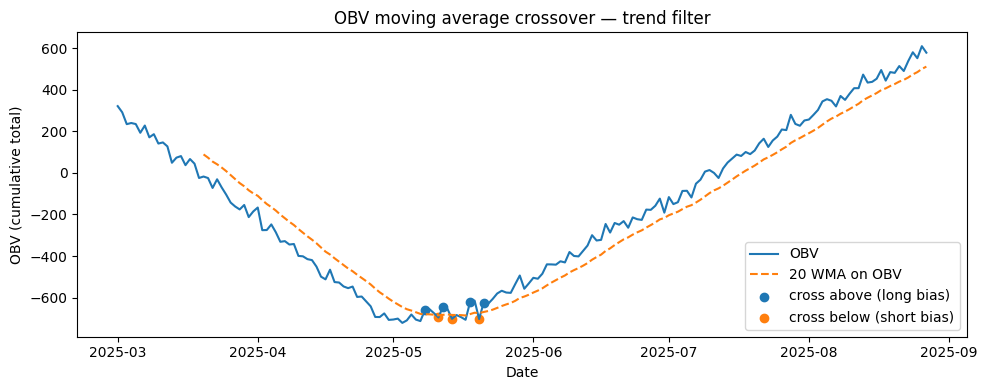
Setup:
- Add a 20-WMA
- Long bias: OBV stays above the WMA and both slope up.
- Short bias: OBV stays below the WMA and both slope down.
- Entries still come from your main setup (breakout, pullback, level touch).
Backtesting OBV tips:
Overlay the moving average on the OBV window and run a blind test: hide candles and look only at the OBV indicator panel. Mark trend direction guesses, then reveal price and see how often the filter kept us out of chop. Track win rate and drawdown difference versus “no filter.”
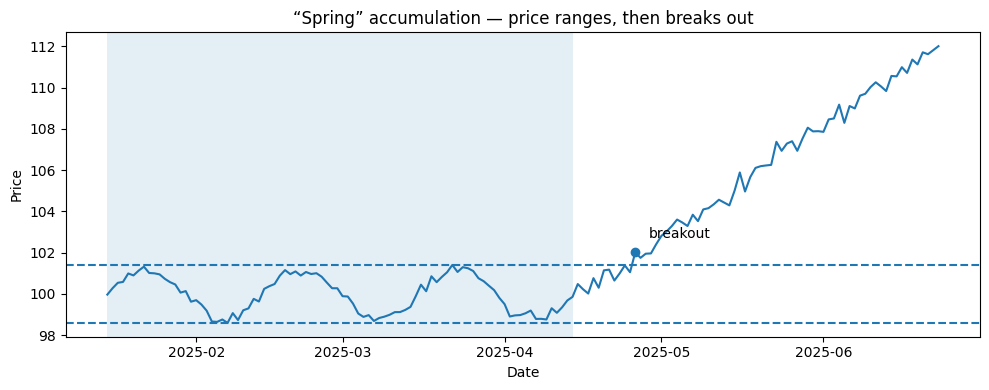
Strategy 4: The “spring” accumulation (the granville method)
Idea: price can go flat while big players accumulate. In that phase, price looks boring, but OBV keeps rising. That mismatch often comes before a breakout.
Setup:
- Price is in a tight range with repeated highs/lows.
- OBV trends up during the range.
- Trigger: price breaks the range high and holds (or breaks and retests).
- Stop: below the range low or below the breakout retest low.
- Target: next resistance zone, then trail if the trend continues.
How to backtest:
Search for flat periods on liquid pairs (eurusd works). Fast-forward through the range, but pause on every OBV rise during sideways price. Log which ranges actually break out and which just fake out. You’ll quickly see whether this works better on H4/D1 than on lower timeframes.
Strategy 5: Confirmation for breakout trading (the validation)
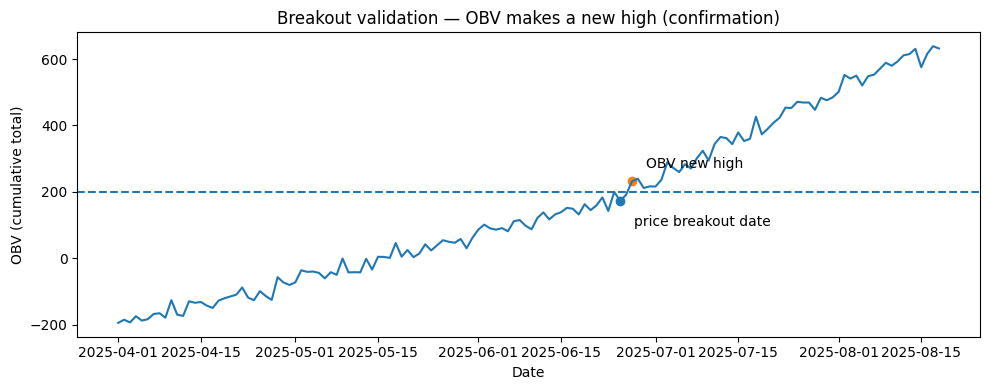
Idea: breakouts fail when they have no fuel. The rule is simple: if price breaks a major level, On Balance Volume should also push to a fresh high (for upside breaks) or a fresh low (for downside breaks). If price breaks but OBV stays flat, we treat it as a likely fakeout.
Setup:
- Mark a clean resistance/support level.
- Breakout trigger: price closes beyond the level.
- Confirmation rule: On Balance Volume must break its prior swing in the same direction.
- If there is no confirmation, we skip or wait for a retest instead of chasing.
Backtesting guide:
Place a buy stop above resistance (or sell stop below support) in replay. The drill is to cancel the order if our indicator does not expand with the break. Run 50-100 samples and compare results with and without the confirmation rule. The more the better. This one often reduces bad trades more than it increases missed trades.
The “Volume Trap” (Managing Limitations)
OBV can get distorted by one-off news spikes. A single headline can pump tick volume for a few minutes, bend the line, and make it look like a real shift, while price later fades back into the range. That’s a classic false signal.
The fix is pairing the OBV indicator with price action. We want structure to agree. If it turns up but price can’t reclaim a key level, we wait. And if price breaks out and On-Balance Volume stays flat, we don’t chase.
In Forex Tester Online, use the economic calendar to replay NFP-type events and watch OBV during the spike and the next hour. You’ll quickly see which reversals follow through and which are just noise.
Step-by-step: How to Backtest OBV Like a Pro
These strategies look simple on a static chart. The real skill is reading it while the candle is forming and price is still moving. That’s where most traders get it wrong. A trading simulator solves this. FX backtesting lets us replay tick-level history, slow down or speed up, and test OBV signals as if it’s live.
It also keeps the results honest. We can include spreads, slippage, and commissions, then review win rate, drawdown, and expectancy. That’s what backtesting OBV is for: turning a “nice idea” into a repeatable rule.
Follow the workflow below.
1) Get access
Open Forex Tester Online, create an account, and sign in.

2) Create a project
Click “new project.”

Pick a liquid symbol (EURUSD is fine to start). Choose a long date range (3-10+ years) so we see different regimes. Turn on trading costs: spread, commission, slippage.
3) Set up your chart stack
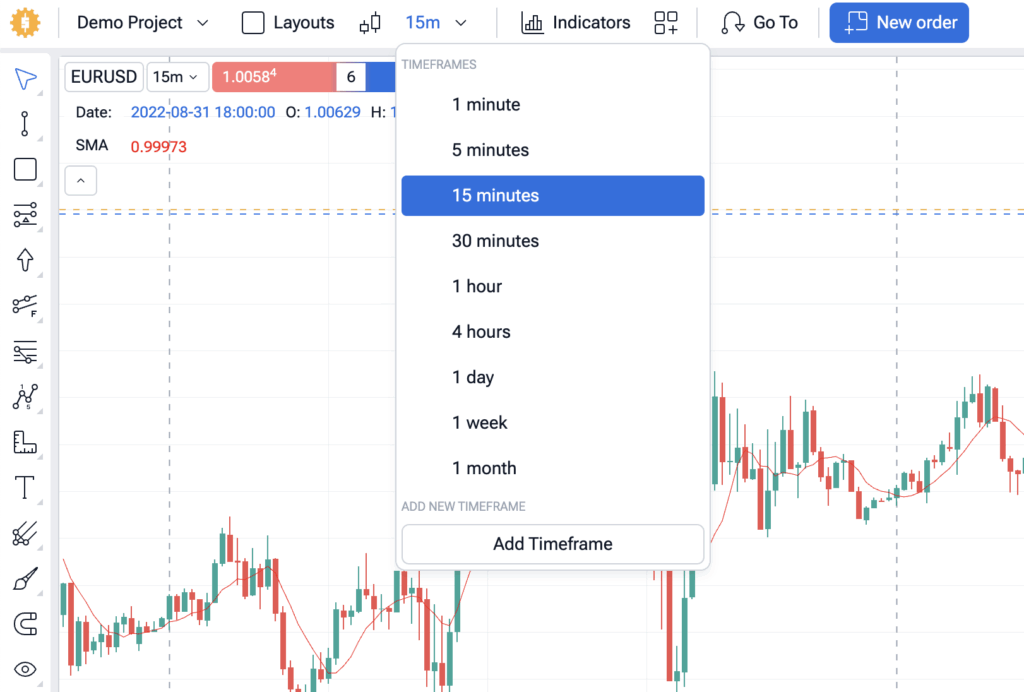
Open the timeframe you want to test first. Start with H4 or D1 to reduce noise. Optionally open a second synced chart (H1) for entry timing.
4) Add the OBV indicator
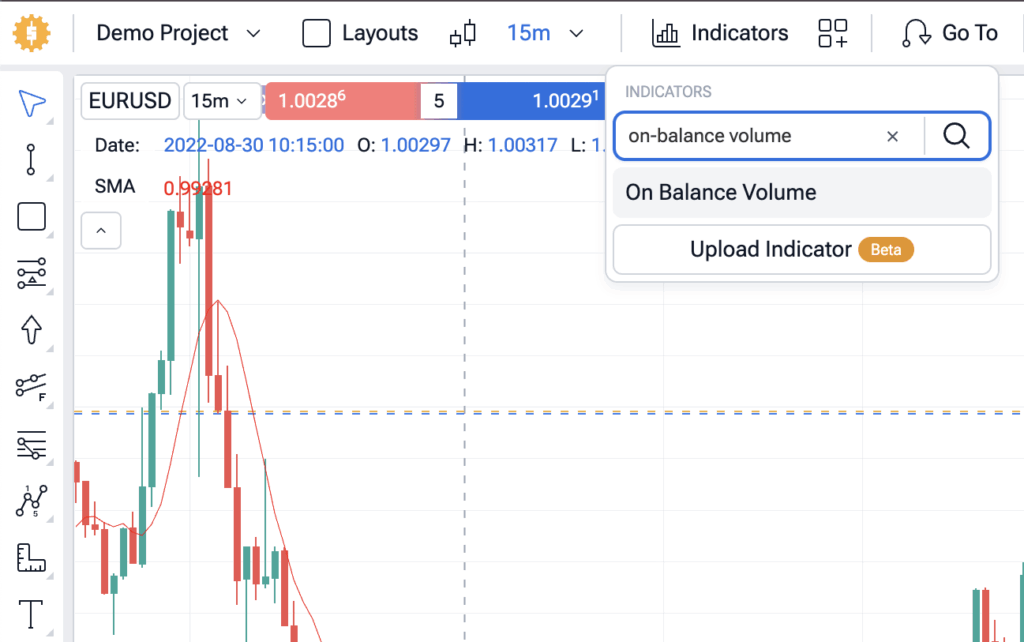
Open the indicators list and add the On-Balance Volume (OBV) indicator to the chart. If you plan to test the moving average filter, add a moving average overlay (for example, 20 WMA).
Save the layout as a template so every run stays consistent.
5) Define one setup (don’t mix signals)
Pick one rule to test first.
Examples:
- Divergence reversal
- Trendline breakout
- Confirmation on breakouts
Write the entry trigger, stop logic, and exit rule before replay. If we “improvise,” the data becomes noise.
6) Replay and trade like it’s live
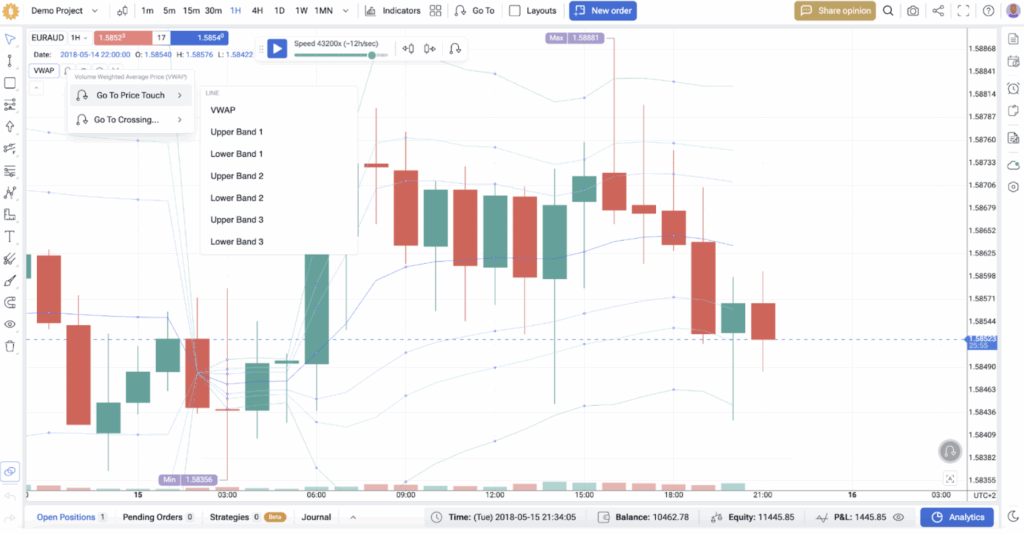
Press play. Use bar-by-bar when you reach the setup area. Take only the trades that match your rule. No hindsight edits. Use rewind to re-run the same area if needed, until the trigger becomes easy to spot.
7) Review analytics after a real sample

After 30-50 trades, open analytics and check:
- Win rate
- Average R
- Drawdown
- Expectancy / profit factor
- Exit Optimizer
- Trading Psychology tips
Then split results by timeframe (H4 vs D1) or by session if you trade intraday.
8) Refine one variable and re-test
Change only one thing:
- confirmation rule (structure break vs close above level)
- stop placement (swing vs ATR buffer)
- smoothing (with MA vs raw OBV)
Run the same backtesting OBV sample again. Keep what holds up across different years. Drop what doesn’t.
If you want to make it work in live trading, you need reps in real conditions. Forex Tester Online gives us that practice without paying for it in the market.
Disclaimer
Trading involves risk. The indicators in this article are for educational purposes only and are not financial advice. Past performance does not guarantee future results. Always test strategies before using real money.
Conclusion
It is a powerful leading indicator, but its signals are subtle. It’s best at showing pressure before price makes it obvious, especially through divergence, trend confirmation, and breakout validation. The mistake is treating it like a single-button entry tool. It works when we pair it with structure and keep the rules consistent.
If we want real skill, we need repetition. Stop paper trading in your head. Use Forex Tester Online to backtest setups on tick data across decades, track the numbers, and refine one variable at a time. Try the demo and drill the strategies from this guide until the signals feel clear in real time.
FAQ
Is the on-balance volume indicator reliable for Forex trading?
Yes, with one caveat. In Forex we don’t have centralized trading volume, so the OBV indicator uses tick volume as a proxy. It still works well for spotting smart money pressure and institutional accumulation on liquid pairs.
What is the best timeframe for the OBV indicator?
It is strongest on H4 and D1. Higher timeframes smooth out noise, so OBV divergence and trend confirmation are clearer. On lower charts, whipsaws create more false signals.
Can it give false signals?
Yes. On Balance Volume is a leading indicator, so it can “turn” before price truly reverses. One-off news spikes can distort tick volume and bend the line without follow-through. We reduce this by pairing with closing price structure and a second tool like RSI or a moving average.
Why does my OBV value look different on different platforms?
Because OBV indicator is a cumulative total. Its absolute number depends on where the platform starts counting and how much history it loads. Different data windows change the baseline. The value itself is not the signal. We focus on slope, swing points, and divergence versus closing price. A trading simulator like Forex Tester Online makes comparisons easy.

Forex Tester Online
Backtest this and 50+ other indicators


