 English
 Deutsch
 Italiano
 Français
 Português
 ไทย
ไทย
 Tiếng Việt
 Polski
 Türkçe
 Nederlands
 Română
 한국어
한국어
 Svenska
 Español
Interesting fact. There are over 100 million traders globally, and less than 300.000 of them are prop firm traders. That’s only 0.3%. The vast majority never gets access. Why so? Because prop trading strategies look easy on paper, but then proprietary trading firm rules turn them into a stress test. One over-size trade, one fast news candle, and we hit the daily drawdown limit. That’s why a prop firm trading strategy is not “just a setup.” It’s entries, exits, and risk rules that survive real spreads and real speed.
In this guide we’ll cover five prop firm strategies that traders actually use: order flow sweeps, mean reversion, range expansion, correlated deviations, and trend following. We’ll also show passing strategies that reduce dumb errors: sizing, time filters, and stop logic. If you’re developing one, we’ll help you turn it into a repeatable plan and test it in Forex Tester Online before you pay hundreds of dollars for an evaluation.
Why Strategy “Theories” Fail in Live Prop Environments
Most strategies don’t fail because the idea is bad. They fail because the environment is strict. A funded prop account is not a normal retail account. We don’t get unlimited drawdown. We don’t get unlimited time. And we don’t get to learn on the fly without consequences.
A theory often assumes three things:
- we always get clean fills
- we can hold through noise
- we can recover after a mistake
Prop rules punish all three. Let’s take a closer look at why this happens every time.
The gap between demo trading and prop firm rules
You don’t take demo trading too seriously, because you know it forgives mistakes. We can hold losers longer. We can move stops. We can ignore daily limits because there are none. That builds bad habits fast.
In a prop evaluation, one rule breaks the account:
- daily drawdown limit
- total drawdown limit
- minimum trading days
- max position size or max lots
- news restrictions on some firms
So even a good edge can fail if our execution is sloppy. This is why a proprietary trading strategy starts with risk rules instead of entries. We have to know our max loss per trade, per day, and per week. If we don’t, we will violate the account before the edge has time to show up.
Why you need 99% tick data accuracy to survive drawdown limits
Prop accounts are often lost by “death by a thousand cuts.” Small slippage, spread spikes, and micro-wicks add up. On bar data, a trade looks safe. On ticks, the stop gets hit.
If we backtest on rough candles, we get false confidence, because stops look like they were never touched. And not only because of that. In addition, targets look like they were hit clear, and drawdown looks smaller than it really is. So, this is very tricky.
That’s dangerous when the max daily drawdown is only a few percent. We need tick-level replay to see if a stop was hit by one tick, and whether the fill would be worse in fast moves. That’s how we avoid the classic prop wipeout: “my setup worked, but the rules killed me.”
Forex Tester Online: moving beyond browser-based “bar replay”
Basic bar replay tools are fine for pattern recognition, but they are weak for prop preparation. In Forex Tester Online, you can create realistic prop firm challenge conditions with specific rules and practice there.
✅ Tick-level movement, so we see real stop behavior
✅ Advanced charting and analytics features
✅ Floating spreads and slippage settings, so fills are realistic
✅ Multi-chart sync, so we don’t leak future data when we check higher timeframes
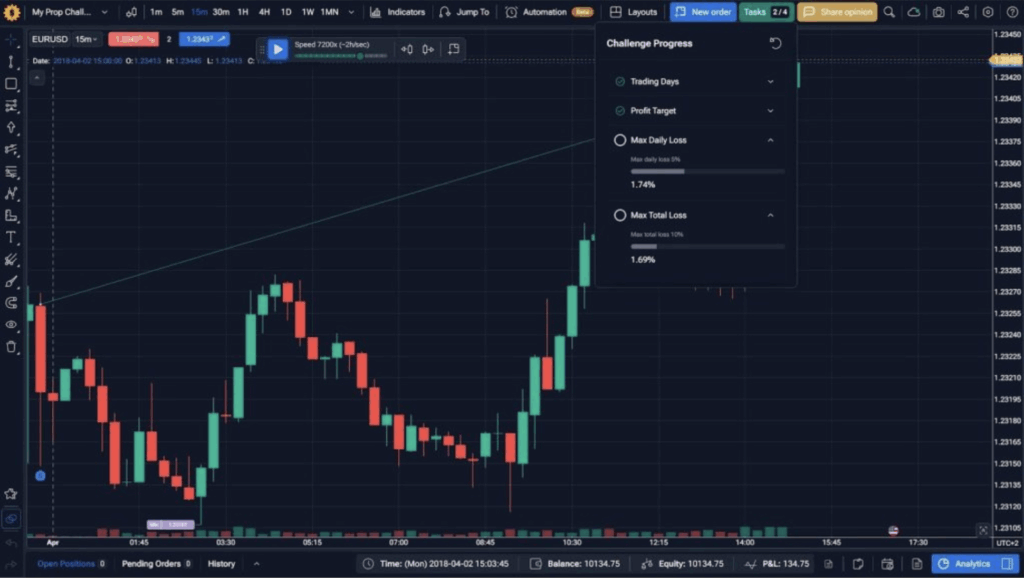
✅ Prop challenge simulations, so we can train under daily/total drawdown and profit target rules
This way theory becomes a tested and trained prop firm strategy. We stop guessing how it “should” work and we prove how it behaves under the exact constraints that decide whether to pass or fail.
Core Alpha Strategies for Professional Prop Trading
In prop, we don’t need many ideas. All we actually need is a few repeatable setups that survive tight drawdown rules. Below are core prop trading strategies built around one principle: trade where liquidity is forced to move, then manage risk like a machine.
Institutional order flow (liquidity grab & fair value gaps)
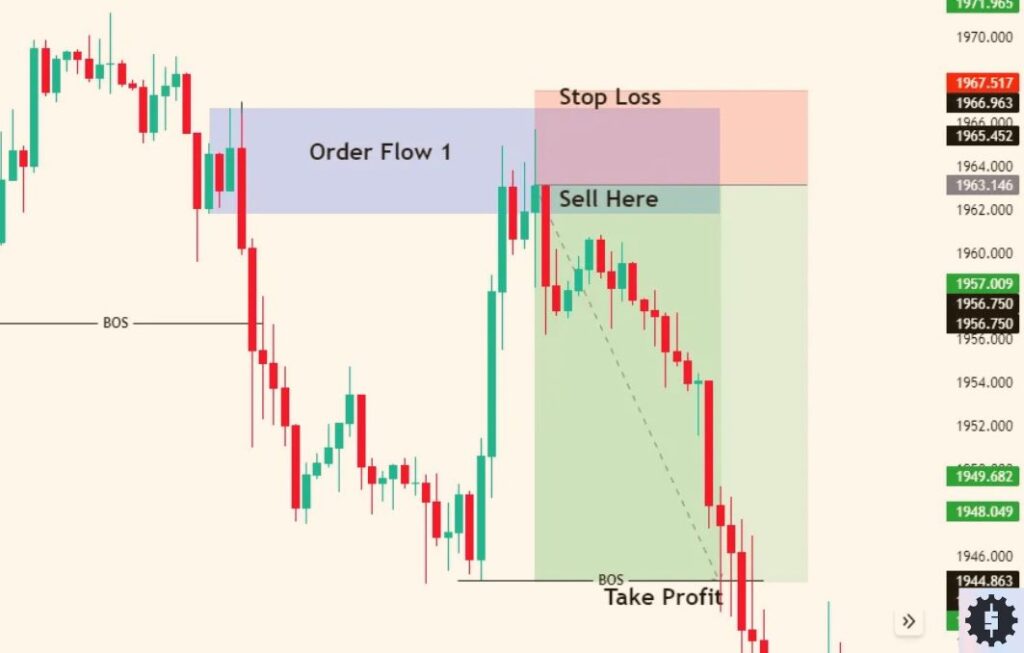
This setup is built around two events:
- A liquidity grab (a sweep). Price runs above a known high (or below a known low), triggers clustered stops, then snaps back into the prior range. Traders often watch the close, not just the wick, because a clean sweep usually pierces the level and then closes back inside.
- Displacement that leaves a fair value gap (FVG). After the sweep, price moves hard in the opposite direction. That fast move can leave an “imbalance” zone on the chart. Many traders define an FVG as a 3-candle gap/void where price moved so sharply that little trading happened in between.
What we mark before the trade (5 minutes of work)
- prior day high / low
- equal highs / equal lows (clean, obvious pools)
- round numbers and session highs/lows
- the nearest higher-timeframe support/resistance zone
This matters because sweeps tend to form around obvious levels where stops cluster.
The entry model (simple and strict)
Step 1: wait for the sweep
- we want a wick through the level
- then a close back inside the range (rejection)
If price keeps closing beyond the level, that’s acceptance, not a sweep. We skip.
Step 2: wait for displacement
- we want a strong push away from the swept level
- often this push prints an FVG (imbalance)
Step 3: use the FVG as the entry zone
Two common entries:
- conservative: wait for price to retrace into the FVG and show a hold (small rejection candle)
- aggressive: place a limit entry inside the FVG zone (only if the sweep + displacement is very clean)
Stop placement:
- stop goes beyond the sweep high (for shorts) or beyond the sweep low (for longs)
- if that level breaks again and holds, the idea is wrong
Targets:
- first target: the nearest internal liquidity (recent swing)
- second target: the opposite side liquidity pool (next obvious high/low)
Prop note: we keep risk per trade small. This setup can be right and still chop once before it runs.
The FTO validation (how we prove it’s real)
This strategy is easy to fake on candle replay. The sweep can be “one tick” and you won’t see it on bar data.
In Forex Tester Online, we validate it like this:
- Replay the sweep on tick-level data and zoom into the micro move (inside the candle)
- Confirm it wasn’t just a normal deeper retracement that never really swept the level
- Watch the retrace into the FVG: does price tap the zone and react, or does it slice through with no respect?
That’s the difference between “smart money story” and a testable prop firm strategy.
Intraday mean reversion (overextended volatility)
This prop trading strategy bets on a simple behavior: after a sharp push, price often snaps back toward an intraday “fair” level. For intraday work, that mean is usually VWAP (an intraday average weighted by volume that resets each session) or a long moving average like the 200-period average.
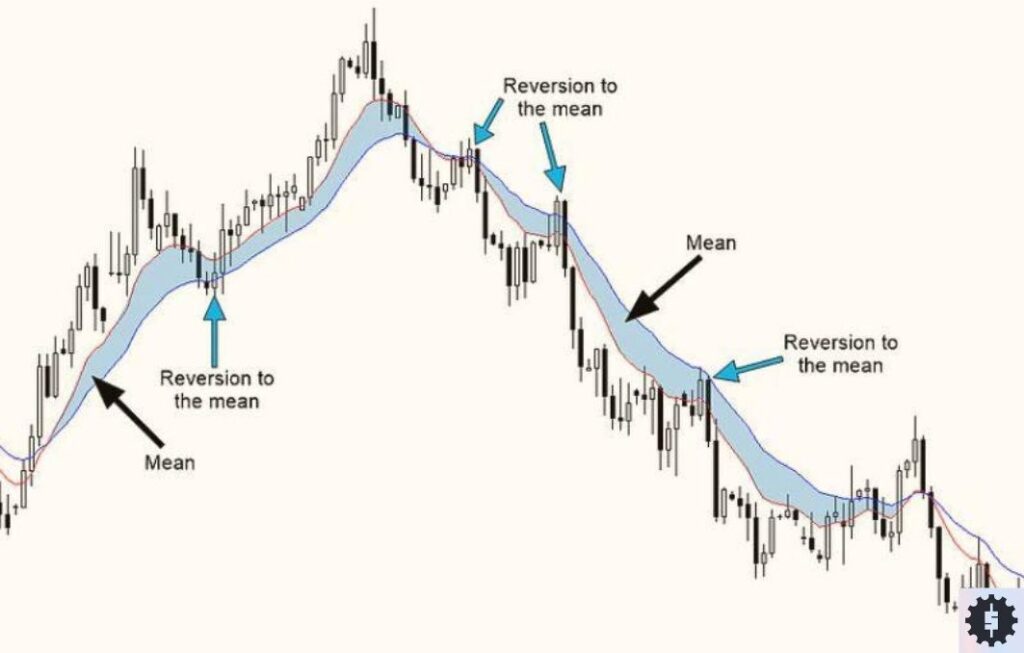
The setup (what we look for)
- We trade during high-liquidity windows, mainly in London and New York, because reactions are cleaner and fills are more realistic.
- We want a clear deviation: price is stretched far from VWAP or the 200 average, usually after a fast impulse candle sequence.
- We want a trigger, not a guess: an exhaustion sign like rsi extreme + a rejection candle (long wick / strong close back toward the mean).
Entry rules (simple version)
- Define the mean: session VWAP or 200 ema (pick one and stick to it)
- Wait for overextension away from the mean
- Enter only after rejection confirms the turn (we don’t fade a strong trend candle blindly)
Stop and targets
- Stop loss goes just beyond the rejection candle extreme (that’s the point that says “the snapback idea failed”).
- Take profit is the mean first (back to VWAP / 200 average), because that’s what the strategy is built to capture.
- If we want a second target, we trail the rest toward the next structure level, but only after price tags the mean.
When mean reversion is most dangerous
Mean reversion can bleed in strong trends. VWAP itself has a known weakness here: in strong uptrends price can stay above VWAP for long stretches, so waiting for “the return” can be costly.
It’s also risky in sudden shock moves (news, gap-like behavior). Research on short-term mean-reversion systems specifically discusses “black swan” conditions and the role of stop-loss risk mitigation in those regimes.
The FTO validation (how we prove it before a prop attempt)
- Replay 5+ years of new york sessions and record how often the snapback reaches VWAP versus keeps running.
- Turn on realistic spreads and slippage, because fast reversals are where live results diverge from clean backtests.
- Tag shock periods (big news days) and check if the “rubber band” turns into account-killing runners. If it does, we add a filter (trend filter, time filter, or skip days with extreme volatility).
Range expansion (the volatility breakout)
This setup is based on one simple idea: volatility contracts, then it expands. We wait for the “quiet” phase, then we trade the move when price breaks out of that tight range. Many breakout guides describe this as a volatility-expansion method after consolidation, with the main risk being false breaks.
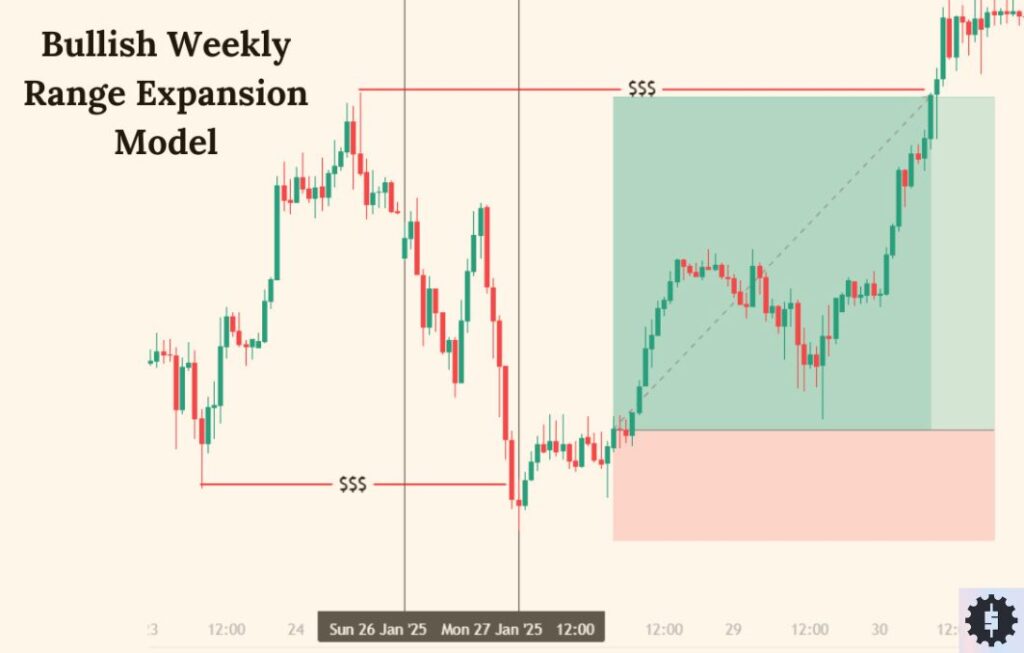
What we look for (the coil)
We want a market that is compressed:
- a narrow daily range (often the narrowest range in several days, like NR7)
- low ADR behavior (price has not been traveling its normal daily distance)
- clean boundaries: repeated touches at the top and bottom of the range
This matters in prop. Compression gives us a clear invalidation point (the opposite side of the range). That helps us keep drawdown under control.
How we trade it (two clean templates)
Template A: daily/asia range breakout
- Define the range (common choice: asia session high/low or prior day high/low).
- Place two stop entries: buy-stop a few points above the range high, and sell-stop a few points below the range low
- When one triggers, cancel the other.
- Stop loss goes on the other side of the range (or just beyond the last swing inside the range)
- Take profit targets. The first target is a fixed fraction of ADR (so we don’t demand an unrealistic move). The second target: the next higher-timeframe level, or trail behind new swings.
Template B: narrow range day breakout (NR7-style)
NR7 is commonly described as the narrowest range day in the last seven sessions, used as a volatility contraction signal before a breakout.
We trade it the same way: define the day’s high/low, then use stop entries above/below. Keep the stop tight enough to respect prop limits, but not so tight that normal spread spikes trigger you.
The news problem (and why it’s part of the strategy)
Range expansion often happens around scheduled catalysts. CPI and NFP are classic volatility triggers in FX.
That’s good and bad:
- good: expansion is real, follow-through is stronger;
- bad: slippage and whipsaws increase.
So we need a rule: either we avoid the first seconds around news, or we size down and accept that the fill won’t be perfect.
The FTO validation (how we prove it)
In Forex Tester Online we test this strategy like a prop trader, not like a chart artist:
- Replay 5+ years and tag low-ADR / narrow-range days, then measure breakout follow-through versus fakeouts
- Use the economic calendar view to separate “news-driven breakouts” from “random session breakouts,” and see which one fits our rules better
- Keep spreads and slippage on, because that’s what hits prop drawdown in real life
If the breakout only works in calm weeks, it’s not a prop firm strategy. If it holds up during news weeks too, then we’ve got something we can scale safely.
Statistical arbitrage (correlated asset deviations)
This is a market-neutral prop trading strategy. We don’t need the whole market to go up or down. We trade the relationship between two assets that usually move together, and we bet on that relationship snapping back to normal.
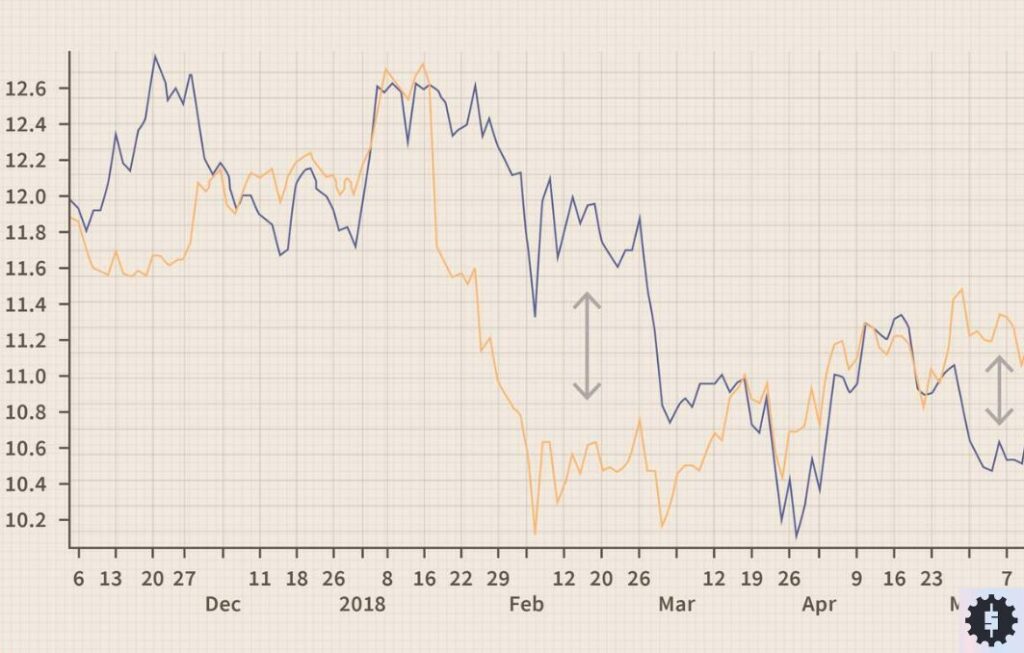
The classic form is pairs trading: we go long the “cheap” leg and short the “rich” leg when the spread between them stretches too far, then we exit when the spread mean-reverts.
Step 1: pick a pair that makes sense
Correlation alone is not enough. Correlation can vanish when regimes change. What we really want is a relationship that tends to be stable over time (many traders use cointegration tests for this reason).
Good starting candidates:
- index pairs (spx vs nasdaq)
- metals (gold vs silver)
- closely linked sector assets
Step 2: build the spread and measure “how stretched”
A simple workflow:
- Calculate the spread (often with a hedge ratio so the legs offset each other).
- Convert the spread into a z-score (how many standard deviations from its recent mean).
Typical rule set:
- enter when z-score hits +2 or -2
- exit when it returns near 0 (or 0.5-1)
- hard stop if it keeps expanding past a max threshold (example: 3) or if a time limit is hit
This is basically the “gap trade”: we trade the gap, not the direction.
Step 3: define risk like a prop trader
Pairs can keep diverging longer than we expect. That’s how drawdown limits get hit.
Risk rules we use:
- size small (spreads move slower, but they can trend),
- stop based on the spread, not the price of one leg,
- time stop to avoid “dead” deviations that don’t mean-revert,
- skip major news that affects only one leg.
Also watch costs. Two legs means two spreads, two commissions, and sometimes borrow costs on the short leg. In prop, those frictions matter.
The FTO validation
Forex Tester Online is useful here because we can test the “catch-up speed” and the exit logic without guessing.
How we test:
- Open two synced charts and run the same historical window side by side.
- Mark deviation entries and record time-to-mean (how long until the spread reverts).
- Use tick-level replay when the spread snaps fast (that’s where fills and stops get messy).
- Set take-profit targets based on what the spread actually does, not what we wish it would do.
If the spread only mean-reverts in calm weeks but breaks in stress weeks, it’s not prop-ready. That’s the whole point of testing it first.
Systematic trend following (the momentum ride)
Trend following is simple in concept: when price keeps moving in one direction, it tends to keep going long enough to trade it. This idea shows up in research as “time series momentum,” documented across futures markets and asset classes over long samples.
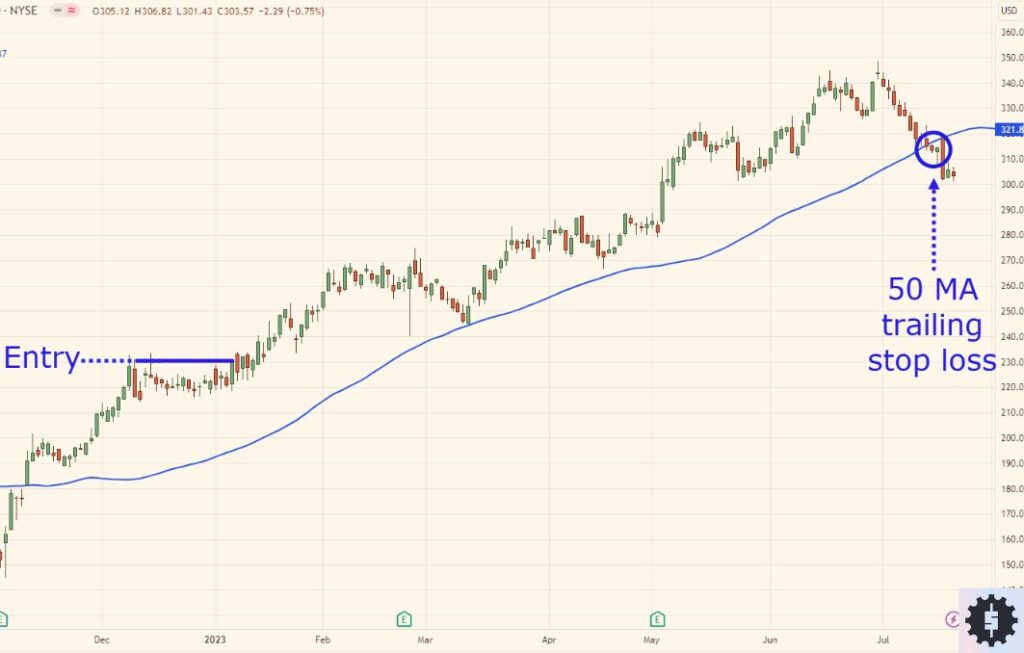
We stick to liquid markets. Trends need clean fills. Trend systems are widely used in managed futures for this reason.
The core rules (price + ema fan)
We combine structure with a moving average “fan” (a ribbon).
Trend filter (long)
- price is making higher highs and higher lows
- ema fan is stacked and rising (example: 20 ema above 50 ema, above 200 ema)
Trend filter (short)
- price is making lower lows and lower highs
- ema fan is stacked and falling
Moving averages are a standard way to smooth noise and define trend direction, including with crossover logic like shorter vs longer averages.
Entry trigger (keep it mechanical)
We don’t buy green candles at the top. We enter on structure.
Two clean triggers:
Pullback entry:
- Wait for a pullback into the 20/50 ema area
- Enter when price rejects back in trend direction (small reversal candle or break of the pullback swing)
Breakout + retest entry:
- Enter on a break of a key swing level
- Add only after a retest holds
Stop placement (structure first)
We set the stop beyond the last swing point that “should not” break if the trend is real.
- long: below the last higher low
- short: above the last lower high
This keeps the stop tied to invalidation, not a random pip number.
Exits (how we stay in the move)
Trend systems win by catching a few big moves. So exits matter more than entries.
We use one of these, then test it:
- Structural break exit: close back through the 50 ema and a break of the last swing
- Trailing stop: a stop that follows price when it moves in our favor and stays fixed when it turns (it is a stop order that “trails”).
For prop accounts, trailing stops often help because they can lock in gains without forcing a fixed take profit.
The FTO validation (what we test, not what we hope)
In Forex Tester Online we run this like a system:
- Replay trend periods with tick-level realism.
- Test several trailing stop widths (tight, medium, wide).
- Compare profit factor and max daily drawdown hits.
- Keep the version that stays stable across different market regimes.
This is where we also use Exit Optimizer. We keep the same entries and sweep exits (stop distance, take profit, time stop). That shows which trailing stop settings keep us in winners longer without violating daily drawdown limits.
Stress-Testing Your Strategy Against Prop Firm Constraints
Many challenges cost about $84-$979 per attempt. Paying that “just to see” is the fastest way to burn cash. It makes much more sense to use a Prop Firm simulator designed specifically for those who want to prepare for the challenge.
Forex Tester Online lets us train under prop rules before we pay. In prop firm challenge mode we set the exact account size, profit target, daily/total drawdown, and minimum days. Then we run unlimited simulations. Same rules, zero attempt fees.
Why this saves money:
- You find out if our position sizing violates the daily limit before a real attempt.
- You see how spreads, slippage, and news spikes affect stop fills.
- You repeat until the equity curve is stable and the rule breaches drop close to zero.
The goal is to practice cheap, then pay once and pass from the first attempt. Whenever you are ready.
Infrastructure: Setting Up Your Modern Trading Command Center
Prop trading is execution plus control. A good prop trading strategy can still fail if our workflow is slow or inconsistent. Keep the “command center” simple and fast.
Trading anywhere: the advantage of a web-based simulator (macOS/Linux/iOS/Android)
We don’t need a heavy desktop stack to train. Forex Tester Online runs in the browser, so we can backtest and practice on macos or linux without fighting installs. That matters when we want to run prop firm passing strategies daily, not once a month.
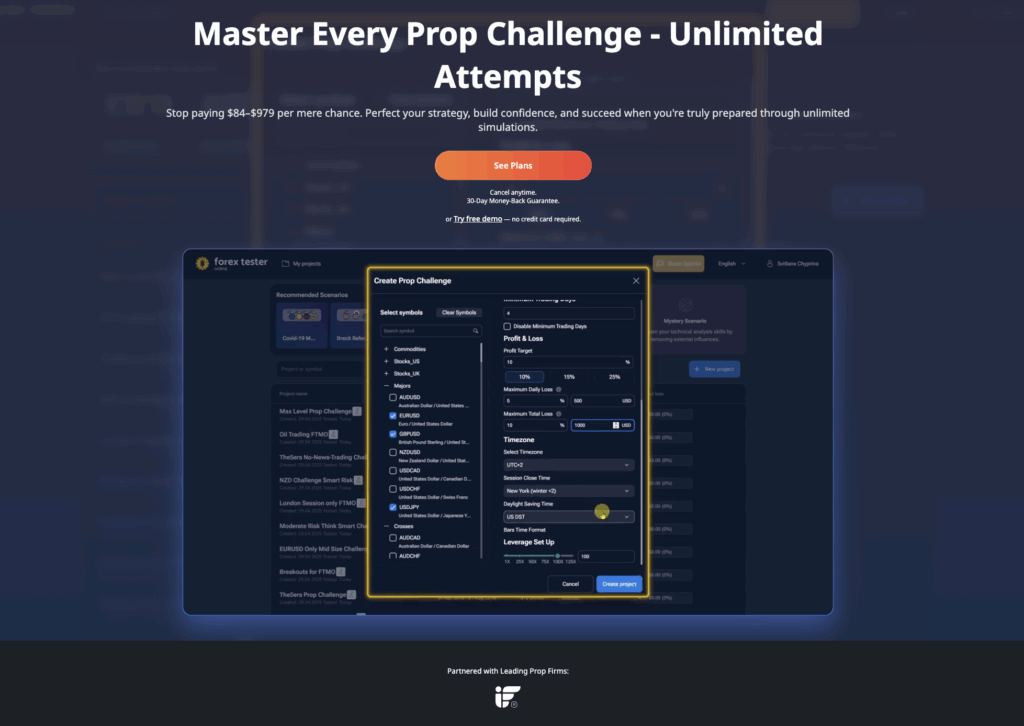
1) Get access
Open Forex Tester Online’s Prop Firm Simulator, select a plan, sign in, and go to the dashboard.
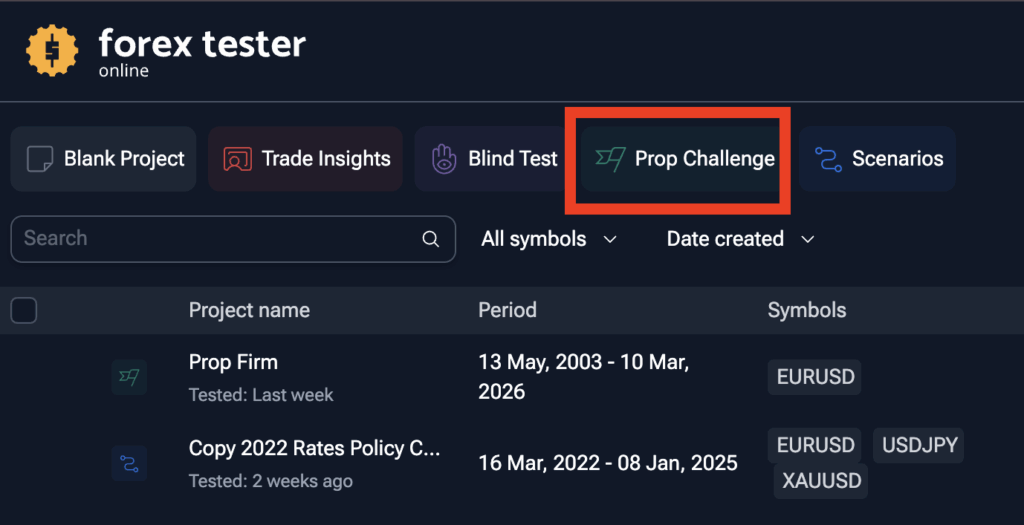
2) Open Prop Firm mode in the main menu
Find the “Prop Challenge” mode section and click to start a new simulation.
3) Adjust rules and settings
Fill in the exact evaluation parameters:
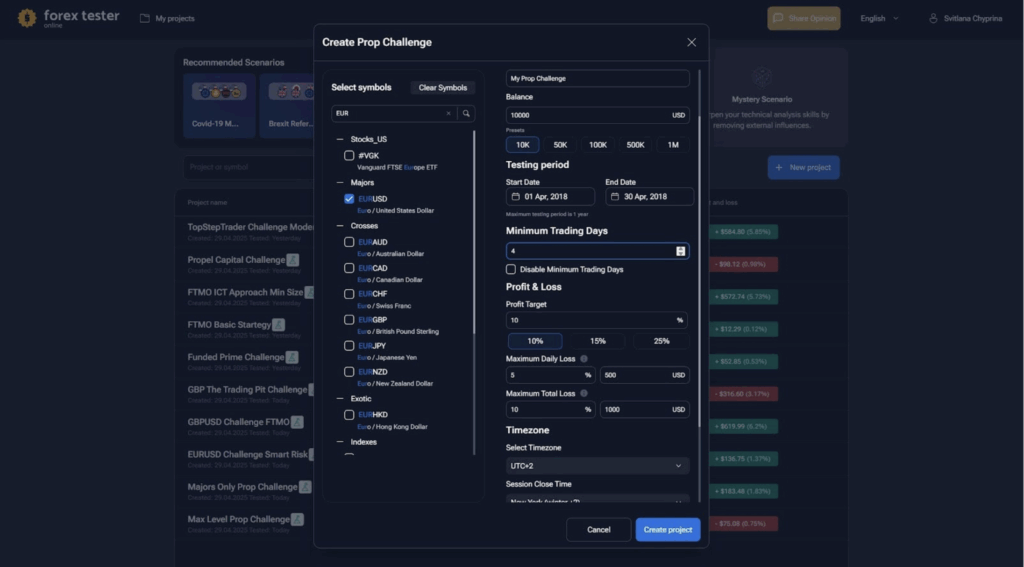
- account size
- profit target
- daily drawdown limit (example: 5%)
- total drawdown limit
- minimum trading days
Save the preset, so we can reuse it for the next runs.
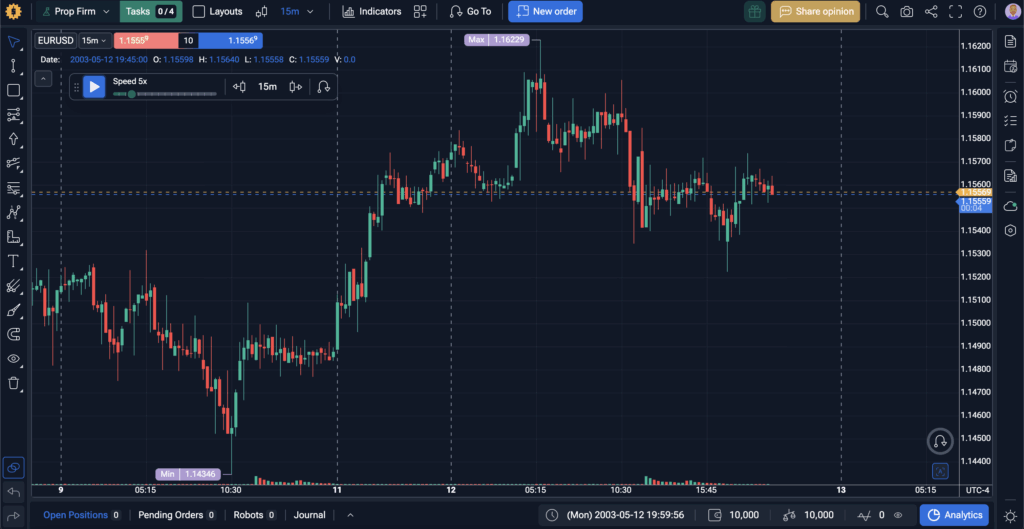
4) Run simulation and try to pass the challenge
Use indicators, drawing tools, navigation features and orders. Check the “Tasks” menu to track your challenge progress and rules.
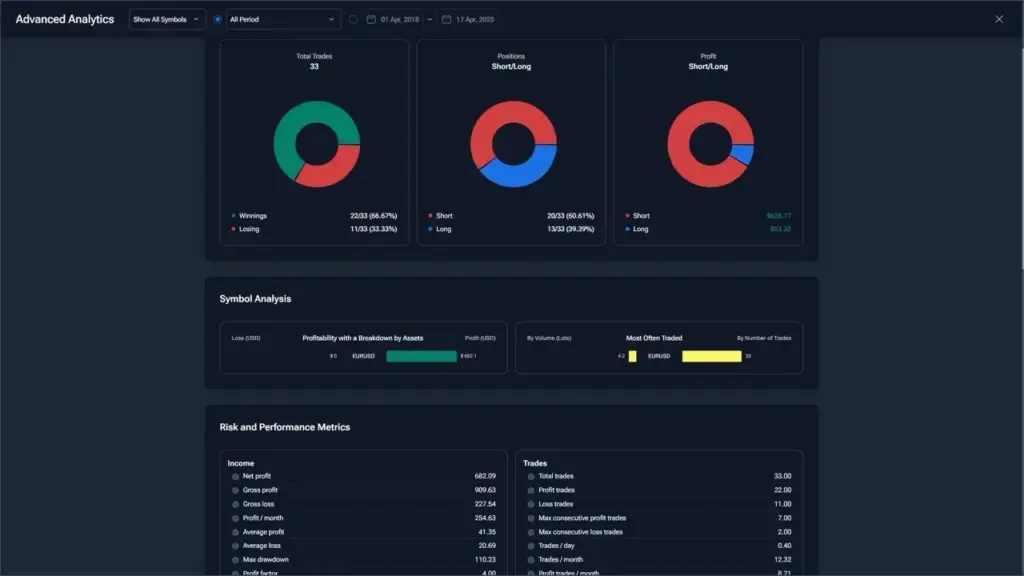
5) View “Analytics”
Use detailed analytics to refine your approach and get tips on your trading psychology. Spot your mistakes and try to perform better next time.
6) Repeat as many times as you need
Here you have unlimited free attempts. Practice as much as you need to prepare before you are ready for the real challenge.
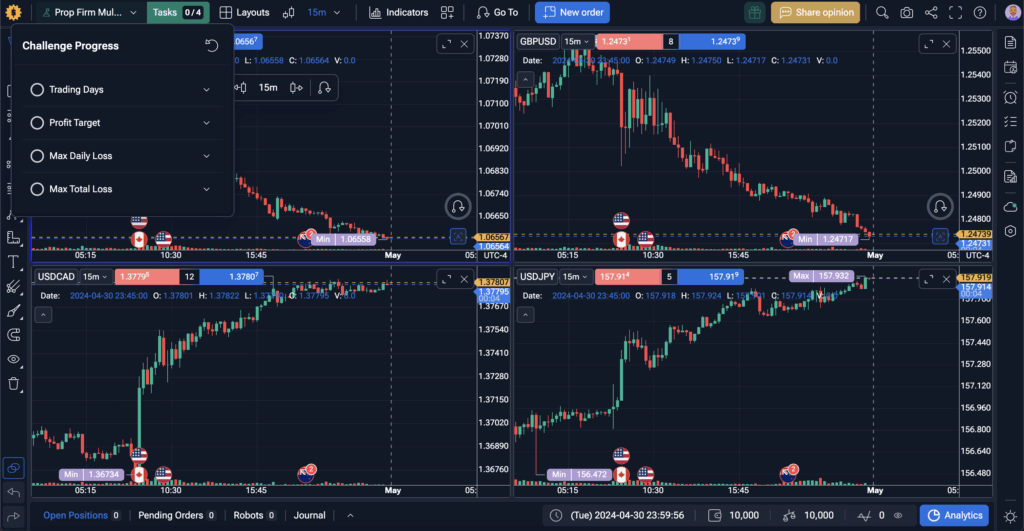
Multi-chart synchronization for multi-timeframe analysis
Most prop trading tips and strategies break when we ignore higher timeframes. Use synced charts for top-down context (daily/h4) and execution timing (h1/m15). This helps us place stops and targets where structure makes sense, not where emotions want them.
Risk-based lot calculation: never guess your position size again
Rule one in prop: survive the drawdown limits. We size every trade from risk, not from “confidence.” Use a risk calculator so position size stays tied to stop distance and account rules. That’s how we avoid accidental over-sizing and keep the prop firm strategy consistent day after day.
Troubleshooting Strategy Decay
- Check the regime. Does the market look like your backtest period (trend vs range, high vs low volatility)? If not, reduce size or pause the strategy.
- Re-test the filters. Session time, news windows, and spread conditions. Many prop firm strategies die because we trade the wrong hours.
- Audit stop-outs. Are stops getting hit by noise more often? Widen stops slightly, cut position size, or add a structure/ATR rule.
- Track execution drift. Slippage and spread spikes can turn a “small edge” into a negative one. Test with realistic costs in Forex Tester Online.
- Re-optimize exits, not entries. Keep entries stable and adjust trailing stop / take profit logic. Use exit optimizer to see what changed.
- Split test: run the strategy on two periods. One calm month and one volatile month. If it only works in calmness, it’s not prop-ready.
- Forward test discipline. Do 20-30 trades in Blind Testing Mode. If you can’t execute cleanly without hindsight, the issue is the process, not the market.
Conclusion: Stop Guessing, Start Simulating
Prop trading is about running a strategy that survives strict drawdown rules, spreads, and fast news moves. The same prop trading strategies that look great in theory can fail in live conditions if sizing and exits are sloppy.
Pick one simple strategy from this guide. Write the rules. Then prove it. Profit!
Use Forex Tester Online as the training ground: test on tick data, run multi-chart context, and rehearse under prop firm challenge mode with the same limits you’ll face in the real evaluation. When the numbers hold and rule breaks drop, you’re ready to pay for one attempt and aim to pass it.
Disclaimer
Trading involves risk. The indicators in this article are for educational purposes only and are not financial advice. Past performance does not guarantee future results. Always test strategies before using real money.
Frequently Asked Questions (FAQ)
Can I test gold and indices on Forex Tester Online?
Yes. We can test gold and major indices the same way we test FX. FTO supports 280 symbols, so it’s realistic for prop firm strategies that mix metals, indices, and currencies. This also helps when we need to combine different strategies for successful trading across assets.
How many years of historical data do I need to prove a strategy?
For a simple trading strategy, start with 2-3 years to get a clean sample. Then expand to 5+ years to cover different volatility regimes and news cycles. If you’re developing a prop trading strategy for a prop firm trading strategy evaluation, more history helps you see drawdowns before they happen live.
Does FTO support custom indicators for my specific strategy?
Yes. If our strategy needs a custom filter or signal, we can add custom indicators in Forex Tester Online and test the full logic. That’s useful when we’re how to set up a prop trading strategy that matches our exact rules, not a generic template.
How is FTO different from TradingView’s replay mode?
TradingView replay is fine for visual practice, but it’s still bar-focused and limited for prep. Our tool is built for backtesting with tick data and real order management, so we can test slippage, spreads, and strict risk rules. And most importantly, TradingView doesn’t have a Prop Challenge backtesting mode, like FTO does.

Forex Tester Online
Prepare for the prop firm challenge!
